Threat Modelling is a Fundamental Skill
 Mar 23, 2026

One of the most powerful ways to identify security risks early in the software development lifecycle (rather than trying to add security in at the end) is through threat modelling.
Threat modelling provides a structured way to think about what assets need to be protected, what could go wrong with a system, and what controls can reduce the risk. Instead of discovering security problems after a system is deployed, threat modelling helps teams identify risks early in the design and planning stages, when they are far easier and cheaper to address.
Moving Security Left
In many organisations, security reviews happen late in the development lifecycle - often just before a system is deployed. By that stage, fixing design flaws can be expensive, time-consuming, or sometimes impossible without significant rework.
Threat modelling shifts security thinking earlier in the process by asking:
- What are we working on?
- What could go wrong?
- What are we going to do about it?
- Did we do a good enough job?
With these simple questions, teams can identify potential weaknesses before they become real problems. This proactive approach aligns with modern security strategies that prioritise early prevention and quick wins to reduce organisational risk.
A Skill Everyone Can Learn
A common misconception is that threat modelling is a specialised discipline only for security professionals. From our experience, this is mainly driven by either a fear of being able to do a good job and it being incomplete, a general lack of knowledge of how one can be done, or the intent being misdirected/abused so the outcome isn’t “I’ve got more work to do!”
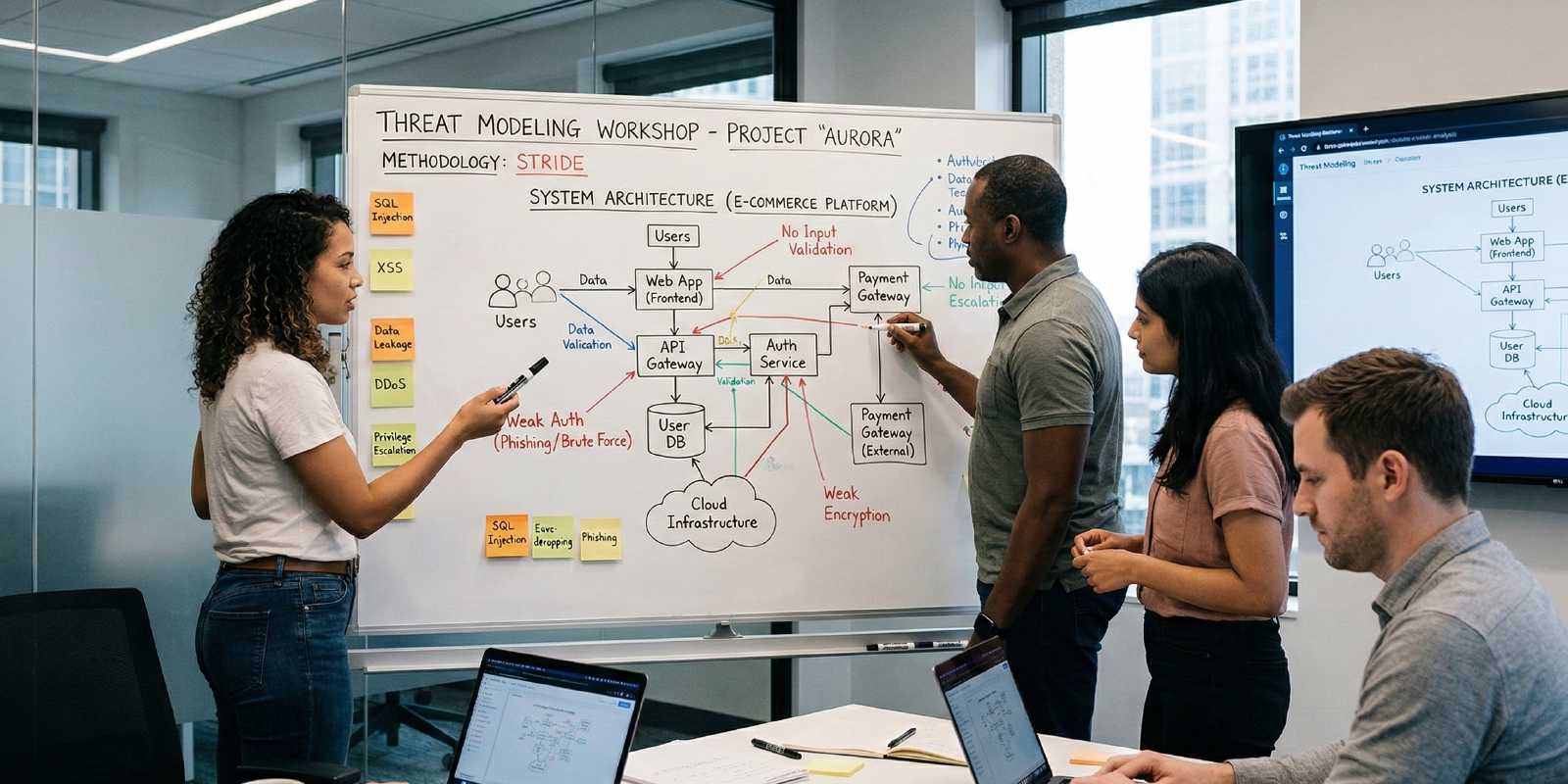
In reality, the most effective threat modelling sessions involve cross-functional teams: engineers, architects, product owners, operations teams, and business stakeholders. Each participant brings a different perspective on how systems work and where risks might appear. When security becomes part of the conversation across teams, organisations gain a much broader view of potential threats.
This reflects a key principle of modern cybersecurity: security is everyone’s responsibility. When more people understand how attackers think and how systems can fail, organisations gain an army of individuals actively looking to reduce risk.
Speed Matters
Despite its benefits, threat modelling is often skipped because teams believe it will take too long or require complicated frameworks.
That’s where a quick threat modelling approaches come in.
Instead of multi-hour workshops and complex documentation, teams can run lightweight threat modelling sessions in minutes. These time-boxed discussions focus on identifying the most realistic threats and the most impactful controls.
In a short session, teams can:
- Identify key assets and trust boundaries
- Consider realistic attacker behaviours
- Surface design assumptions that may be incorrect
- Agree on security controls or follow-up actions
- Even a brief discussion can reveal critical insights that would otherwise be missed.
Building Security into Everyday Work
Threat modelling is most effective when it becomes a habit rather than a one-off activity. Just like code reviews or testing, it should occur regularly whenever systems are designed, modified, or deployed.
Over time, these repeated conversations help security thinking become instinctive - much like looking both ways before crossing the road. When security is embedded into everyday workflows, organisations can make better risk decisions and deliver new capabilities with greater confidence.
The Real Benefit
Ultimately, threat modelling is about better decision-making.
It helps teams:
- Understand what they are protecting
- Identify realistic attack scenarios
- Prioritise the controls that actually reduce risk
- Communicate security concerns clearly across teams
Most importantly, it enables organisations to move from reactive security - fixing problems after incidents occur - to proactive security that prevents them in the first place.
Learn to Do It Fast
Learning how to perform quick, practical threat modelling is a valuable skill for anyone involved in technology, risk, or decision-making.
With the right approach, threat modelling doesn’t need to be complicated or time-consuming. In fact, some of the most effective sessions happen in just a few minutes - providing rapid insights that help teams build systems that are secure by design.
And when threat modelling becomes part of how teams think, discuss, and build systems, security stops being a barrier and becomes an enabler for delivering technology safely and confidently.
If you’d like to learn how to perform quick threat modelling for your team, then please get in touch.